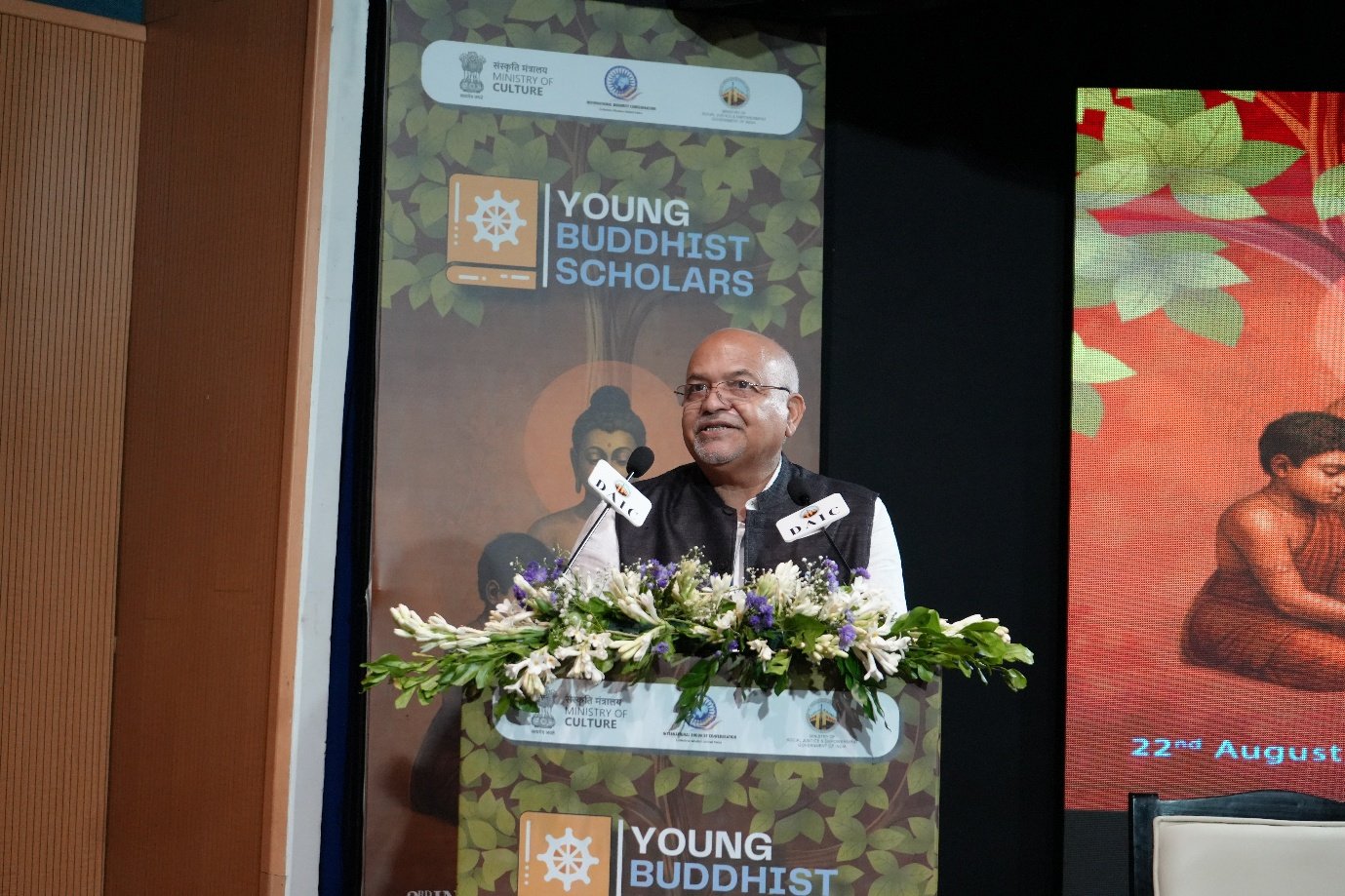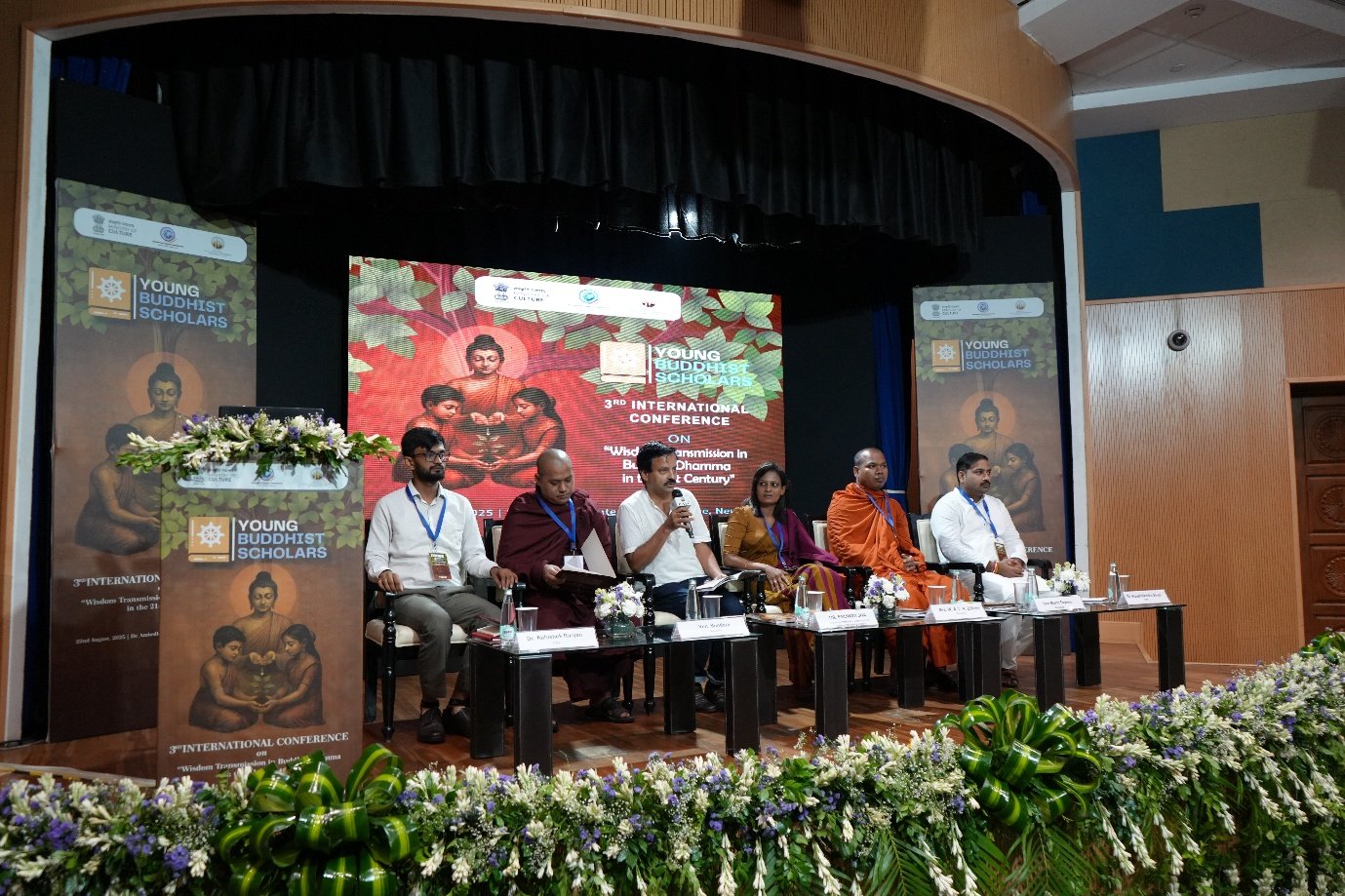
The 3rd International Conference of Young Buddhist Scholars (ICYBS) was held on
at the
Dr. Ambedkar International Centre, New Delhi, organized by the
International Buddhist Confederation (IBC) with support from the
Ministry of Culture and the
Ministry of Social Justice & Empowerment, Government of India.
The conference theme, Wisdom Transmission in Buddha Dhamma in the 21st Century
,
explored how the timeless teachings of the Buddha continue to provide guidance in a rapidly
changing world marked by materialism, mental unrest, environmental crises, and ethical dilemmas.
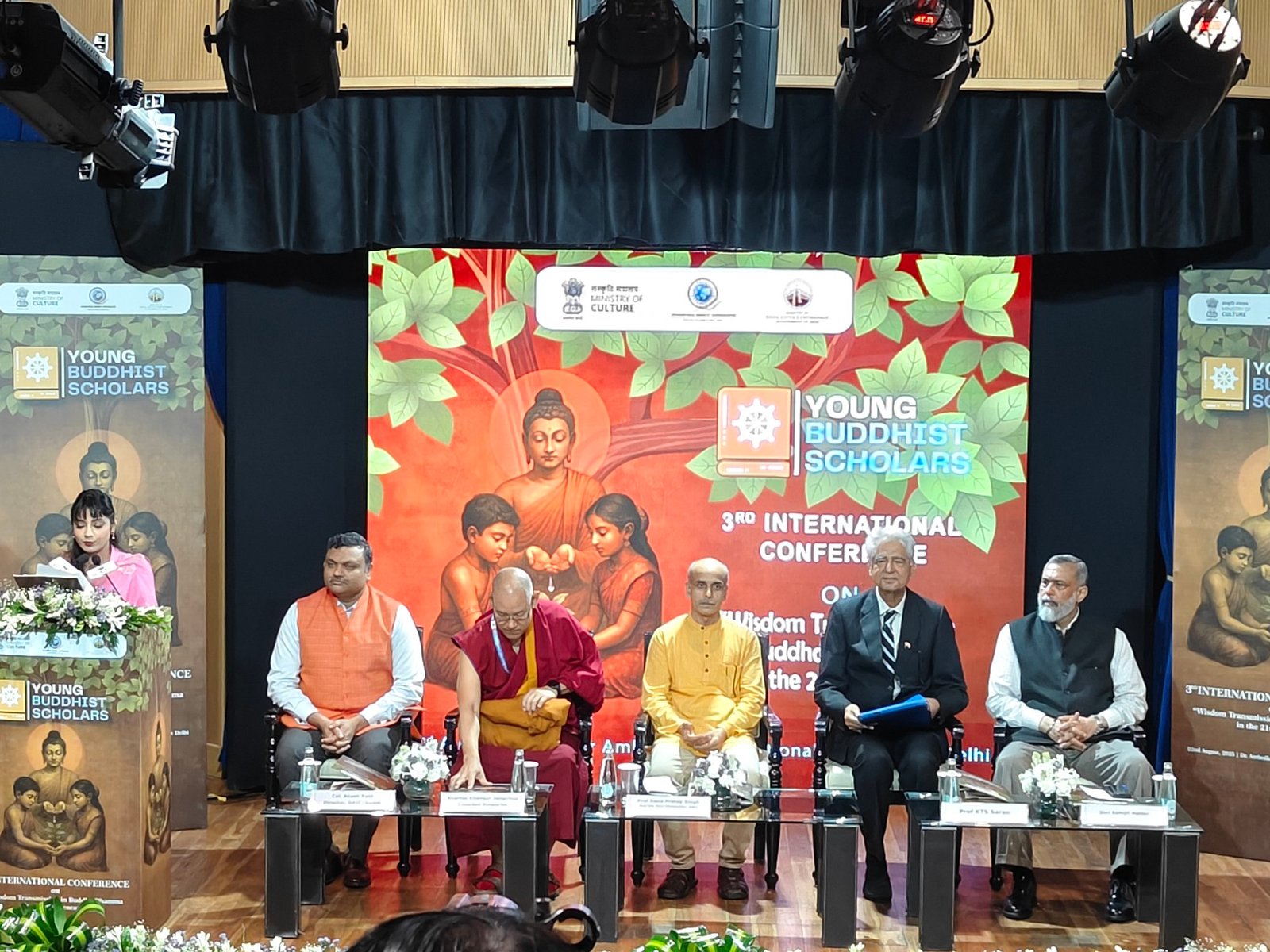
As part of the opening remarks, Shartse Khensur Jangchup Choeden Rinpoche,
Secretary General, IBC, expressed that the IBC feels deeply blessed and privileged to host
the event in collaboration with DAIC. He extended a warm welcome to the dignitaries of the
occasion — Chief Guest Prof. Rana Pratap Singh, Vice Chancellor of Gautam
Buddha University; Keynote Speaker Prof. K.T.S. Sarao, eminent historian;
Sh. Abhijit Halder, Director General IBC; Col. Akash Patil,
Director DAIC; moderators and speakers. He emphasized the importance of the theme and the
role of youth as the driving force for future Dhamma propagation.
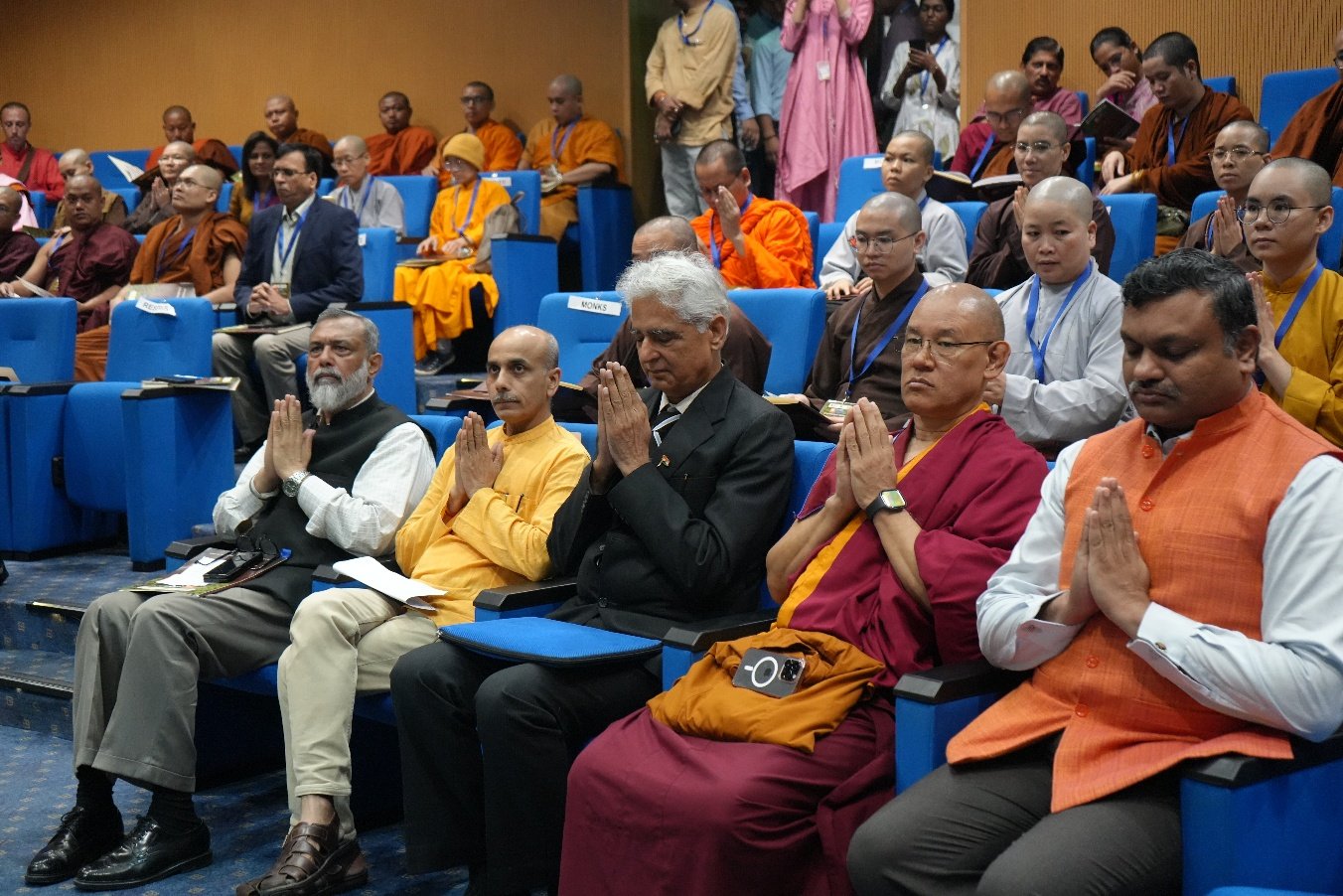
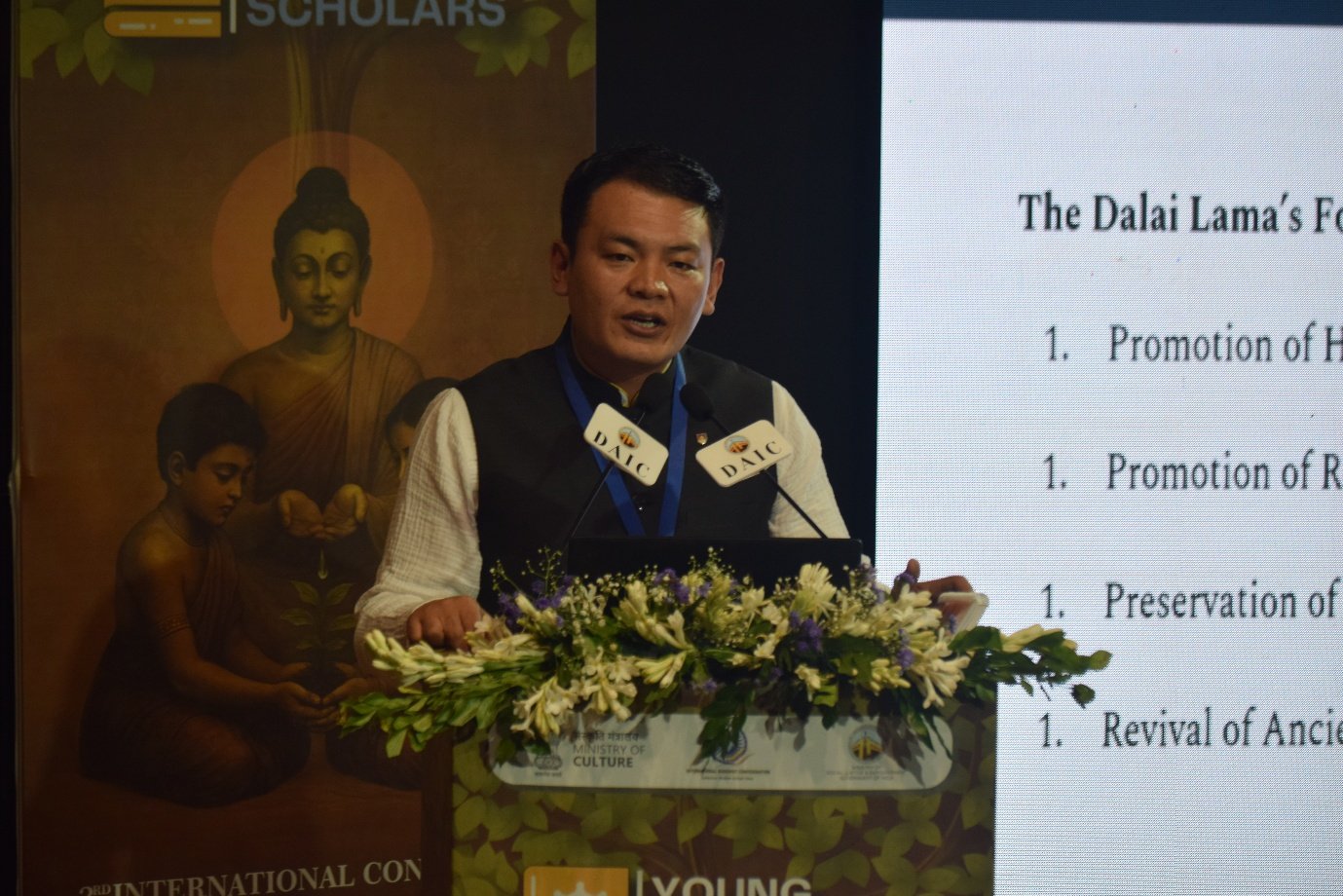
In his inaugural address, Shri Yeshi Dawa elaborated on wisdom transmission,
stressing that Dhamma is not merely a philosophy but a lived experience. He quoted
Prime Minister Narendra Modi: India gave the world Buddha, not Yuddha
,
a powerful message in times of conflict. He noted that many wars and chaos arise from
social comparison, which causes suffering. He emphasized compassion as the
underlying principle of Buddha Dhamma to navigate such issues.
Shri Abhijit Halder, Director General of IBC, spoke about the overwhelming
participation of young scholars and announced plans to broaden the conference’s reach to
neighboring countries. He traced the idea of wisdom transmission back to the
Dharmachakra Pravartana Sutra and acknowledged Emperor Ashoka’s role in spreading
Dhamma across Asia. He highlighted five core principles for youth:
mindfulness, impermanence,
compassion and empathy, self-discovery, and
environmental & social responsibility. He also mentioned innovative tools
like Norbu.ai to connect with younger generations.

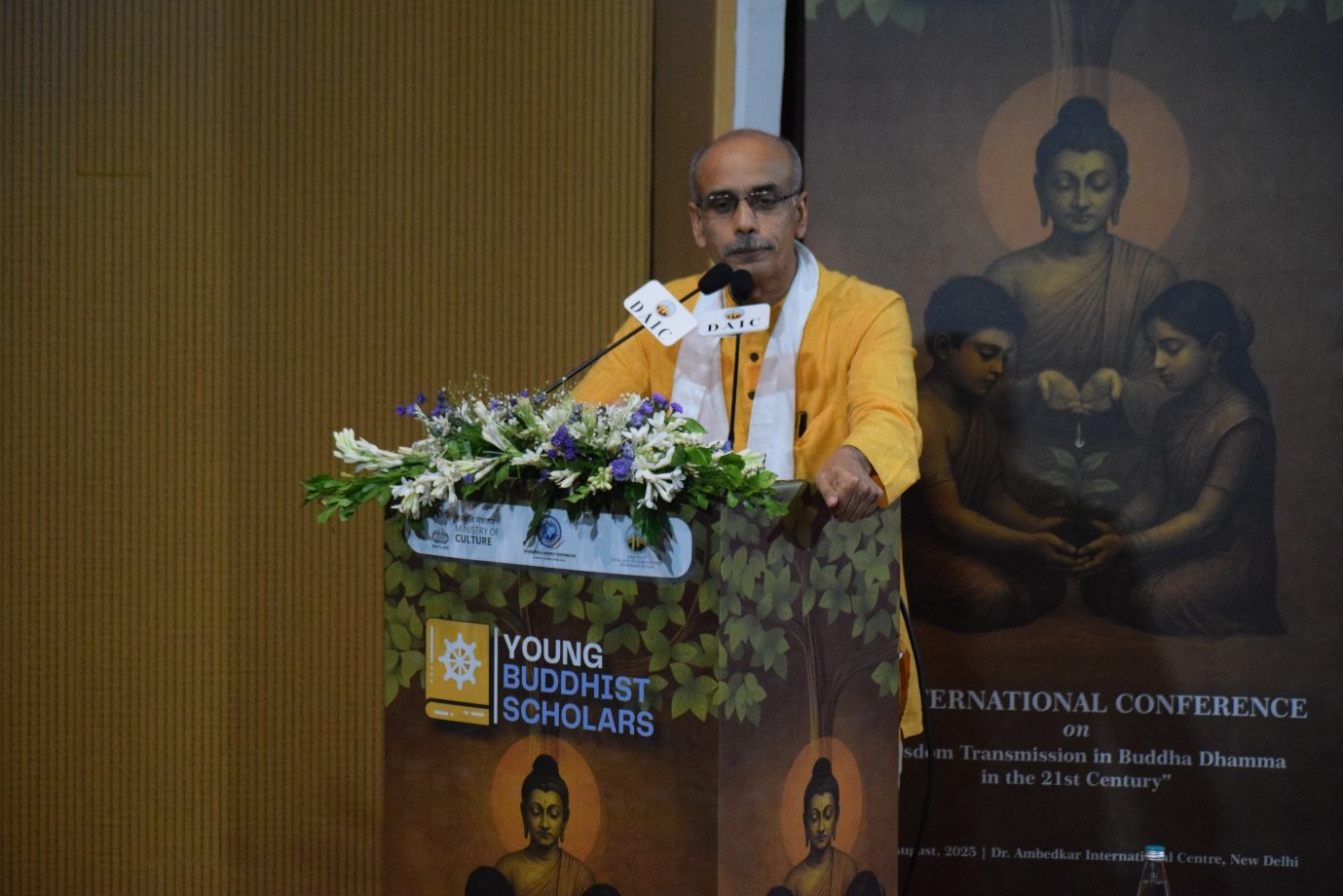
Prof. Rana Pratap Singh, in his address, emphasized the integration of moral
education into academic curricula. Meanwhile, Prof. K.T.S. Sarao commended IBC
for using the term Buddha Dhamma
instead of Buddhism
and praised IBC’s efforts in
repatriating the sacred Piprahwa relics, a historic step in preserving Buddhist heritage.
Panel Discussions
There were four panel discussions held in the conference.
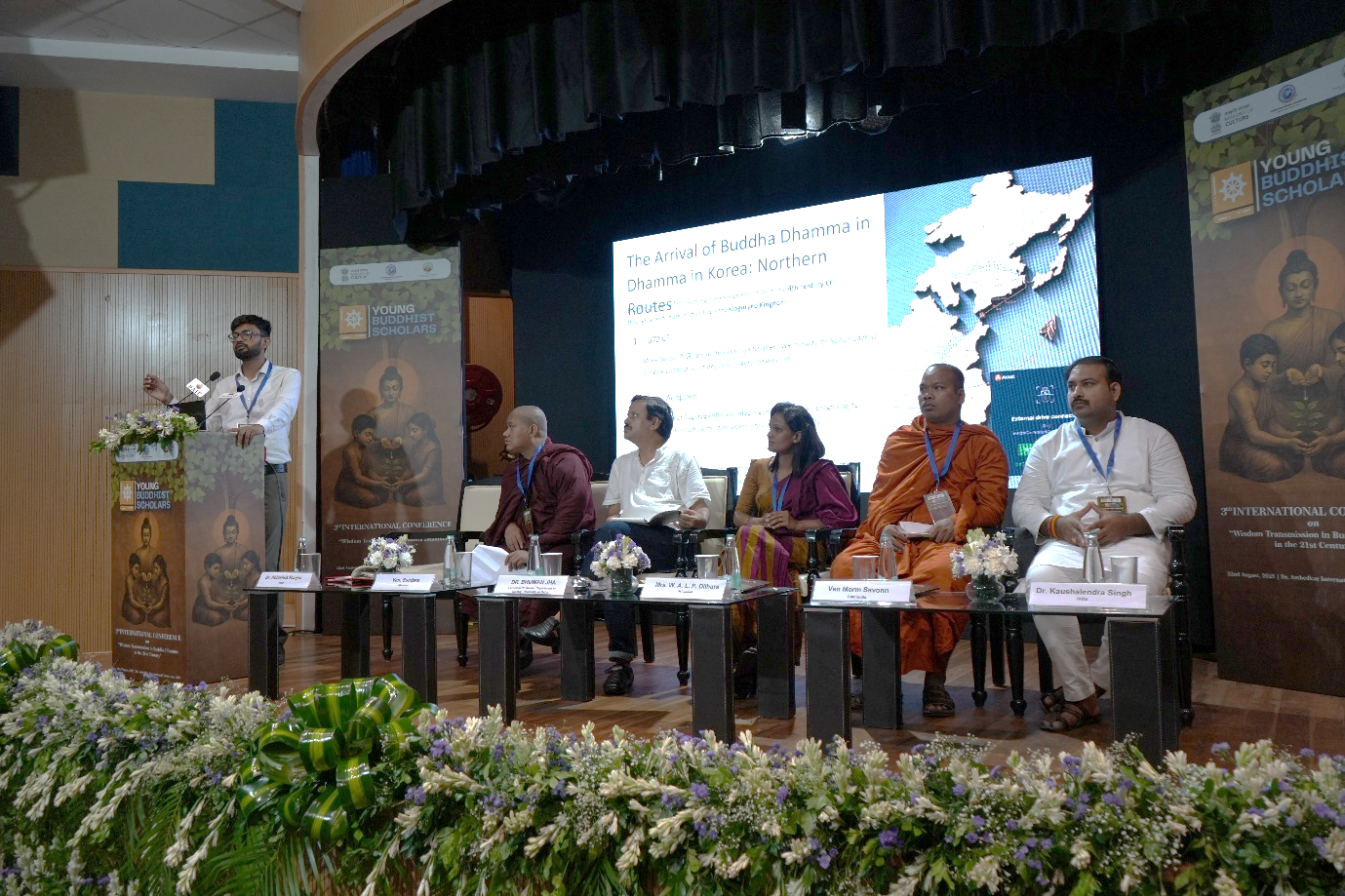
The first panel was on Buddha Dhamma, Dissemination and Social Transformation
.
The Dependent Origination from the Theravada perspective was presented by a speaker.
The other speakers traced the spread of Buddha Dhamma to the Korean peninsula, Cambodia and Sri Lanka through figures like
Monks Sundo and Maranantha, Princess Suriratna, and
Emperor Ashoka’s son Mahinda Thero. Emperor Ashoka’s compassionate governance, which marked a departure from conquest-driven policies
to an ethical statecraft rooted in the welfare of all beings, was discussed.
The panel concluded that in times of rapid modernization and socio-economic inequalities, a return to Dhamma-based ethics is essential to restore balance.
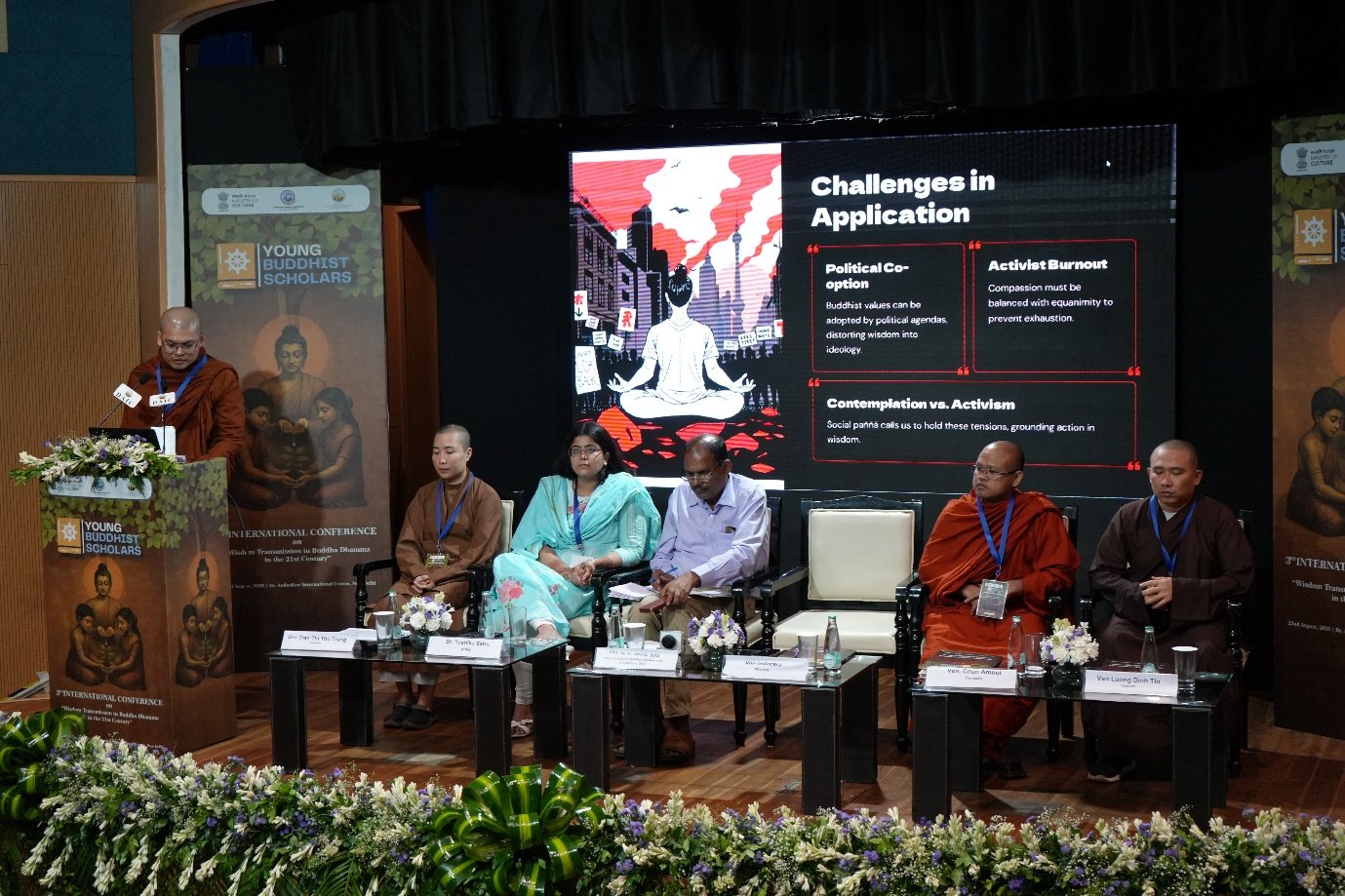
The second panel on Buddha Dhamma and Embodied Wisdom
focused on the integration of wisdom (Panna) and compassion (Karuna).
Speakers presented insights from Cambodia’s Buddhist traditions, highlighting the role of monasteries as community centres for education and cultural preservation.
The Bhaddekaratta Sutta was discussed as a teaching that encourages living in the present moment, warning against the dangers of
presence poverty
— a modern condition where people are physically present but mentally distracted by the past or anxieties about the future.
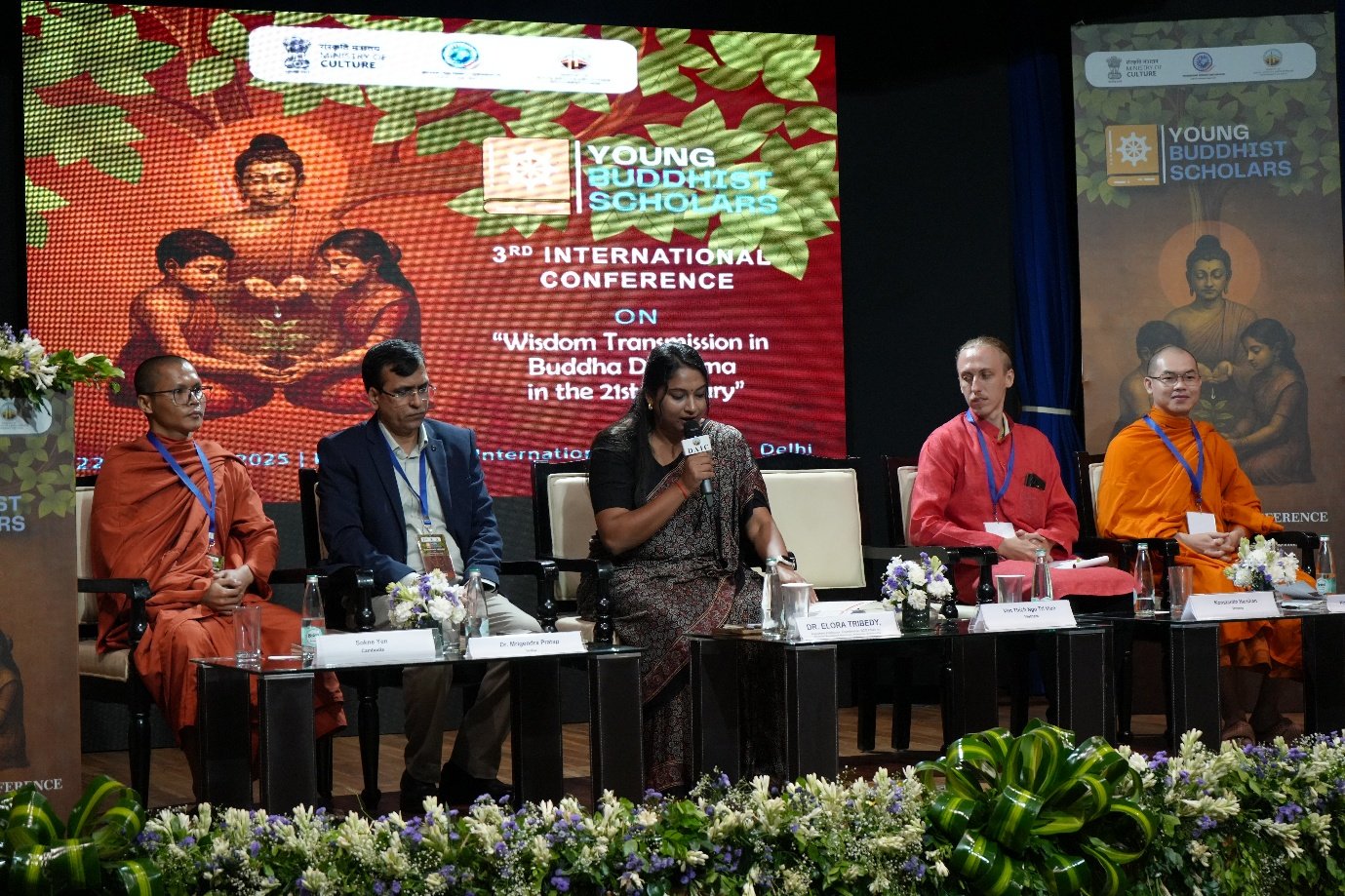
The third panel which was on Buddha Dhamma, Technology and AI
addressed how to ensure that emerging technologies like Artificial Intelligence
serve humanity without undermining spiritual values. Speakers acknowledged AI’s potential in preserving scriptures, creating digital archives, and building
interactive platforms for learning. However, they also warned against risks such as algorithmic bias, dehumanization of sacred knowledge, and commercialization
of spiritual traditions. Buddhist ethics such as Right Speech, Right Livelihood, and Mindfulness were proposed
as guiding principles for AI governance.
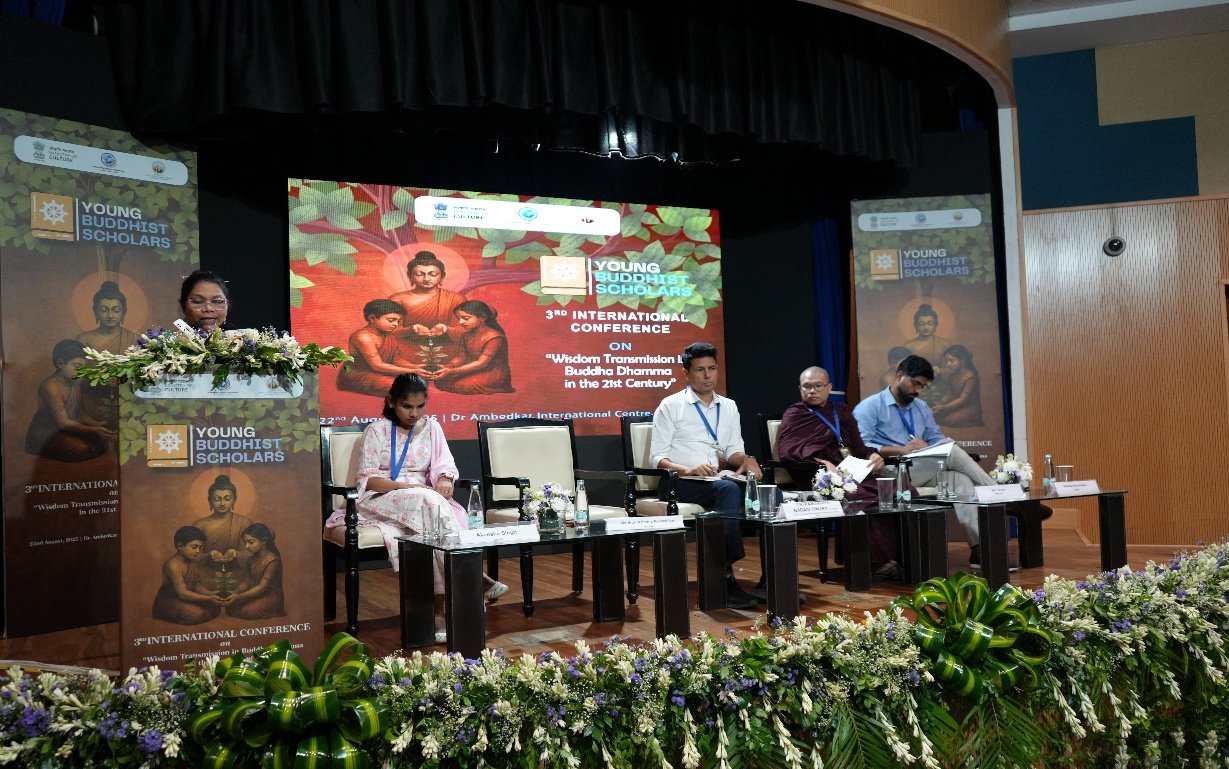
The final panel had a discourse on Youth, Education on Dhamma
.
The role of youth was realized as the torchbearers of Dhamma in a world of shifting values and global challenges.
The youth can contribute more towards digitizing Buddhist manuscripts, organizing clean-up and preservation drives at pilgrimage sites, and developing
interactive learning tools to make Dhamma accessible to young people globally.
The panel emphasized that youth-driven initiatives can bridge traditional wisdom with innovative problem-solving approaches.
Special Presentation
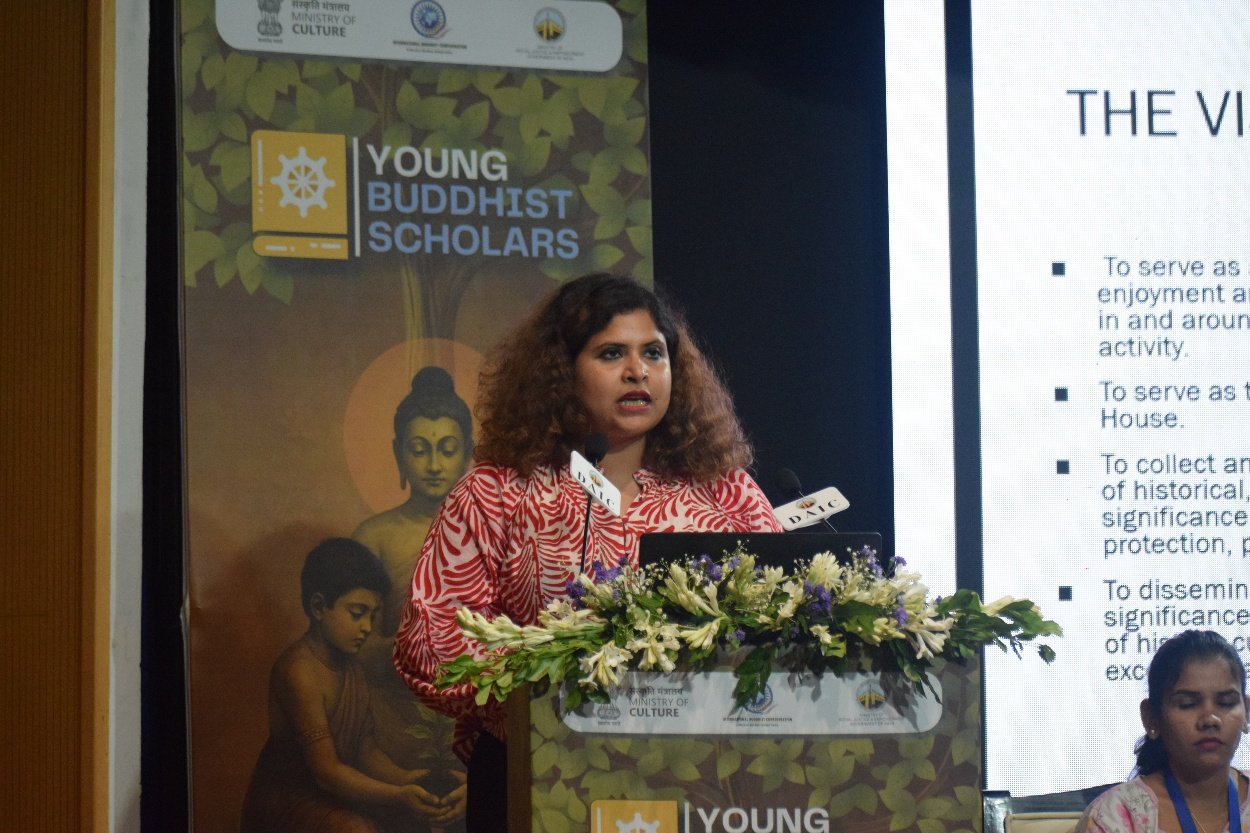
A special presentation by the National Museum was showcased on Buddhist collections including sacred relics, manuscripts,
its curation and digital innovations like the Virtual Experiential Museum of Art (VEMA).
International collaborations like the Indo-Siam Connect were highlighted as an example of how cultural diplomacy strengthens Buddhist heritage preservation.
Conclusion
Prof. Ravindra Panth, Director & Head of Academic Department, IBC, concluded the event by reaffirming that
Buddha Dhamma is a living tradition. The Triple Gem — Buddha, Dhamma, and Sangha continues to offer guidance
for building a more ethical, compassionate, and mindful society.
He also extended heartfelt gratitude to the Ministry of Culture for their support in organizing this conference.